Schindler's List (1993) — Review, Story, Cast & Where to Watch
Schindler's List (1993) is a powerful true story of one man who started out chasing money and ended up risking everything to save lives. Directed by Steven Spielberg and based on the novel Schindler's Ark by Thomas Keneally, it tells the story of Oskar Schindler, a German businessman in occupied Poland who saves more than a thousand Jewish workers from the camps. This article explains the story of Schindler's List, introduces the cast and characters, explores the themes of courage, complicity and humanity, gives an honest review, and shows where you can watch it legally.
What makes Schindler's List essential is its honesty. It is filmed in black and white, it does not look away from the horror of the Holocaust, and it shows a hero who is flawed, selfish and, in the end, transformed. It is a film that asks to be watched with attention and respect.
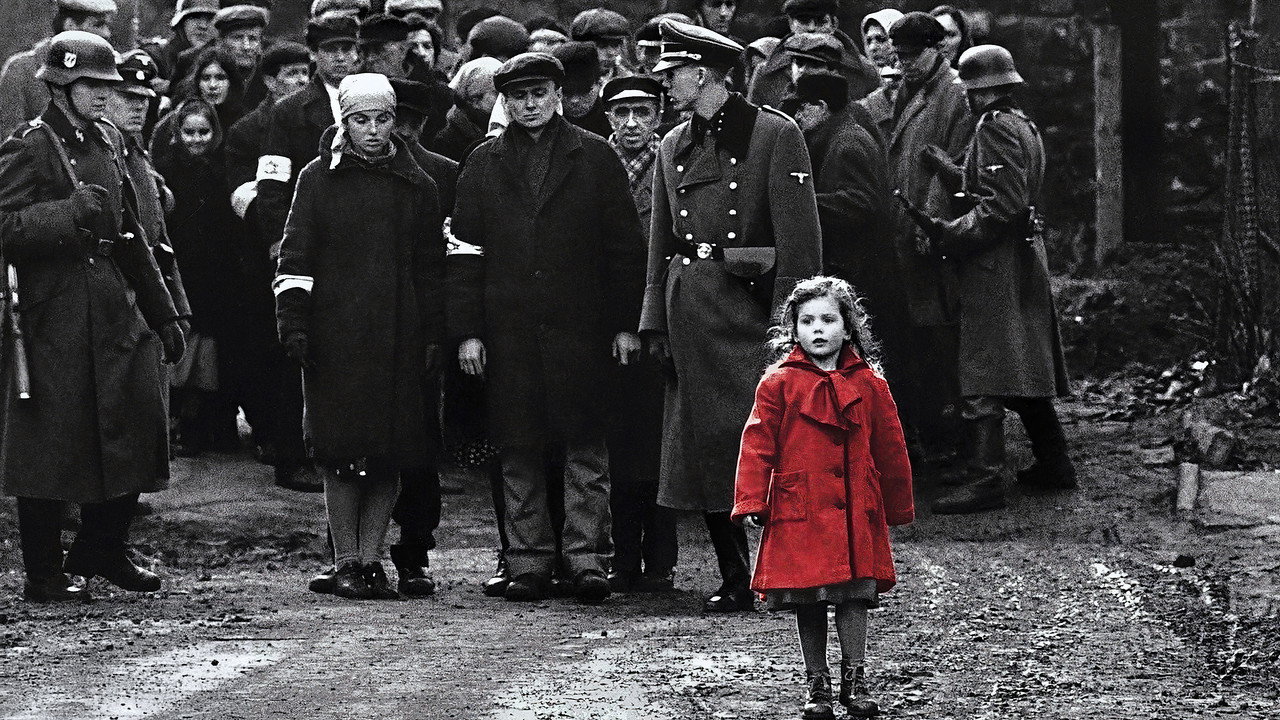
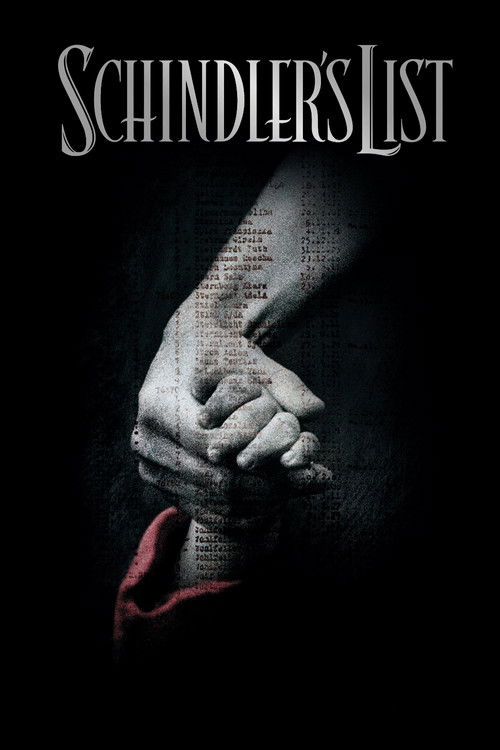
The film's black-and-white photography is its first statement: this is not entertainment but a record, a way of remembering something that must not be forgotten.
- Title: Schindler's List
- Year: 1993
- Channel / Studio: Universal Pictures — Universal Pictures, Amblin Entertainment; directed by Steven Spielberg; based on the novel Schindler's Ark by Thomas Keneally
- Genre: Historical Drama
- Length: Runtime: 195 minutes (3 hours 15 minutes)
Story of Schindler's List — Explained
In occupied Poland during the Second World War, German businessman Oskar Schindler arrives in Krakow looking to profit from the war, opening a factory staffed by Jewish workers because they are cheap labour. The film opens with Schindler as a charming opportunist, a man who enjoys the good life and sees the war as a business opportunity. His accountant, Itzhak Stern, is the quiet, moral force who sees what Schindler does not yet see: that the workers are not cheap labour but people whose lives are in danger.
As the Nazi regime's cruelty deepens under the brutal commandant Amon Göth, Schindler watches the people he employs being rounded up and sent to their deaths. The film shows the liquidation of the ghetto in a sequence that is among the most harrowing ever filmed, and Schindler's slow awakening is the film's heart: a man who begins by looking away and ends by refusing to look away. With the help of Stern, he begins a desperate plan to save as many as he can, spending his fortune to keep over a thousand workers on a list that will spare them from the camps. The list itself becomes the film's symbol: a piece of paper that means life, and a man who gives everything he has to add one more name. It is a powerful true story of one man who started out chasing money and ended up risking everything to save lives, and its ending, with the survivors and their descendants, is one of the most moving in cinema.
The liquidation of the ghetto is the film's most harrowing sequence, filmed in a documentary style that makes the horror feel real and immediate. Schindler watches from a hill, and the film shows his face as he understands, for the first time, what the regime he profits from is actually doing. That watching is the film's turning point: a man who has looked away can no longer look away, and his change begins there. Stern's role in that change is crucial: he is the quiet, moral force who shows Schindler what can be done, who compiles the list, and who risks his own life to save others. The list itself becomes the film's symbol, a piece of paper that means life, and Schindler's desperate efforts to add names, to bribe officials, to spend his fortune, give the film its tension. Göth's cruelty is the film's horror: a commandant who can be charming one moment and murderous the next, and whose casual violence shows the regime's evil at its most personal.
Cast of Schindler's List
Liam Neeson plays Oskar Schindler with a warmth and complexity that makes the character's transformation believable. Neeson's Schindler is charming, flawed and, in the end, heroic, and his final scene, breaking down over the lives he could not save, is heartbreaking. Ben Kingsley plays Itzhak Stern, Schindler's accountant, whose quiet moral authority guides Schindler's change. Kingsley's Stern is the film's conscience, a man who risks everything with dignity and patience.
Ralph Fiennes plays Amon Göth, the brutal commandant, in a performance that is terrifying in its casual cruelty. Fiennes makes Göth a man who can be charming one moment and murderous the next, and his presence gives the film its horror. Caroline Goodall plays Emilie Schindler, Oskar's wife, whose own moral clarity challenges her husband, while Jonathan Sagall plays Poldek Pfefferberg, one of the workers whose survival depends on the list. Embeth Davidtz plays Helen Hirsch, a young woman in Göth's household whose suffering shows the regime's cruelty at its most personal.
Neeson's Schindler is charming, flawed and, in the end, heroic, and his final scene, breaking down over the lives he could not save, is heartbreaking in its honesty. Kingsley's Stern is the film's conscience, a man who risks everything with dignity and patience, and whose quiet authority guides Schindler's change. Fiennes's Göth is terrifying in his casual cruelty, a man who can be charming one moment and murderous the next, and his presence gives the film its horror. Goodall's Emilie is a woman whose own moral clarity challenges her husband, and whose support for his work is quiet but vital. Sagall's Pfefferberg is one of the workers whose survival depends on the list, and his story gives the film its human scale, while Davidtz's Helen Hirsch, a young woman in Göth's household, shows the regime's cruelty at its most personal, and her suffering is one of the film's most painful threads.
Themes and What Makes Schindler's List Work
The central theme of Schindler's List is the choice between complicity and courage. Schindler begins as a man who profits from the system, and the film shows him slowly choosing to resist it, at enormous personal cost. A second theme is the value of a single life: the film insists that saving one person matters, and that a list of names is not an abstraction but a thousand individual lives. There is also a theme of witness: the film is a record, a way of remembering, and its black-and-white photography gives it the feeling of a document, something that must not be forgotten.
Schindler's List will appeal to viewers who love historical drama, true stories and serious cinema, and to anyone who wants to understand one of history's darkest chapters. At 195 minutes, it is a long and difficult film, but its importance justifies the length, and it is essential viewing.
Another theme is the power of a single person. The film insists that one man, flawed and selfish, can make a difference, and that the choice to act matters even when the system seems unstoppable. There is also a theme of memory and witness: the film is a record, and its final scenes, with the real survivors, insist that remembering is itself an act of resistance. Schindler's List will appeal to viewers who love historical drama, true stories and serious cinema, and to anyone who wants to understand one of history's darkest chapters. It is a film that asks to be watched with attention and respect, and it rewards that attention with a story of extraordinary humanity.
Is Schindler's List Worth Watching?
Schindler's List is a masterpiece. Its greatest strengths are its honesty and its performances: Spielberg's direction is restrained and powerful, Neeson and Kingsley are superb, and the film's black-and-white photography gives it a timeless, documentary quality. The film does not offer comfort, but it offers truth, and its ending is profoundly moving. It is one of the most important films ever made.
The film's weaknesses are few and mostly a matter of the difficulty of its subject. It is harrowing to watch, and its length demands a real commitment. Some viewers have debated its portrayal of its hero. But these are small points against a film of such power and importance. Schindler's List is essential viewing, a film that honours the people it portrays and the history it records.
The film also deserves praise for its restraint. Spielberg's direction is powerful without being showy, the black-and-white photography gives the film a timeless quality, and the performances are superb across the board. The film does not offer comfort, but it offers truth, and its ending is profoundly moving. On the weaker side, it is harrowing to watch, and its length demands a real commitment. Some viewers have debated its portrayal of its hero. But these are small points against a film of such power and importance. Schindler's List is essential viewing, a film that honours the people it portrays and the history it records, and one of the most important films ever made.
How to Watch Schindler's List Legally
Schindler's List is available to stream legally on Peacock, and it is also available to rent or buy on Amazon Prime Video and Apple TV. Availability can vary by country, so check your local catalogue if it is not showing on one of these services in your region. The film runs for 195 minutes, three hours and fifteen minutes, so plan for a long and demanding viewing session. It is a historical drama with harrowing scenes of violence and cruelty, so it is strictly for adult viewers, and it is best watched without distractions.
The film is best watched without distractions, and its three hours and fifteen minutes demand a real commitment, but its importance justifies the length. It is strictly for adult viewers, given its harrowing scenes of violence and cruelty. Check the streaming options listed above for your country, since availability varies by region.
More about Schindler's List: cast, story, official trailer & where to watch »