Mahabharat (2013) — Review, Story, Cast & Where to Watch
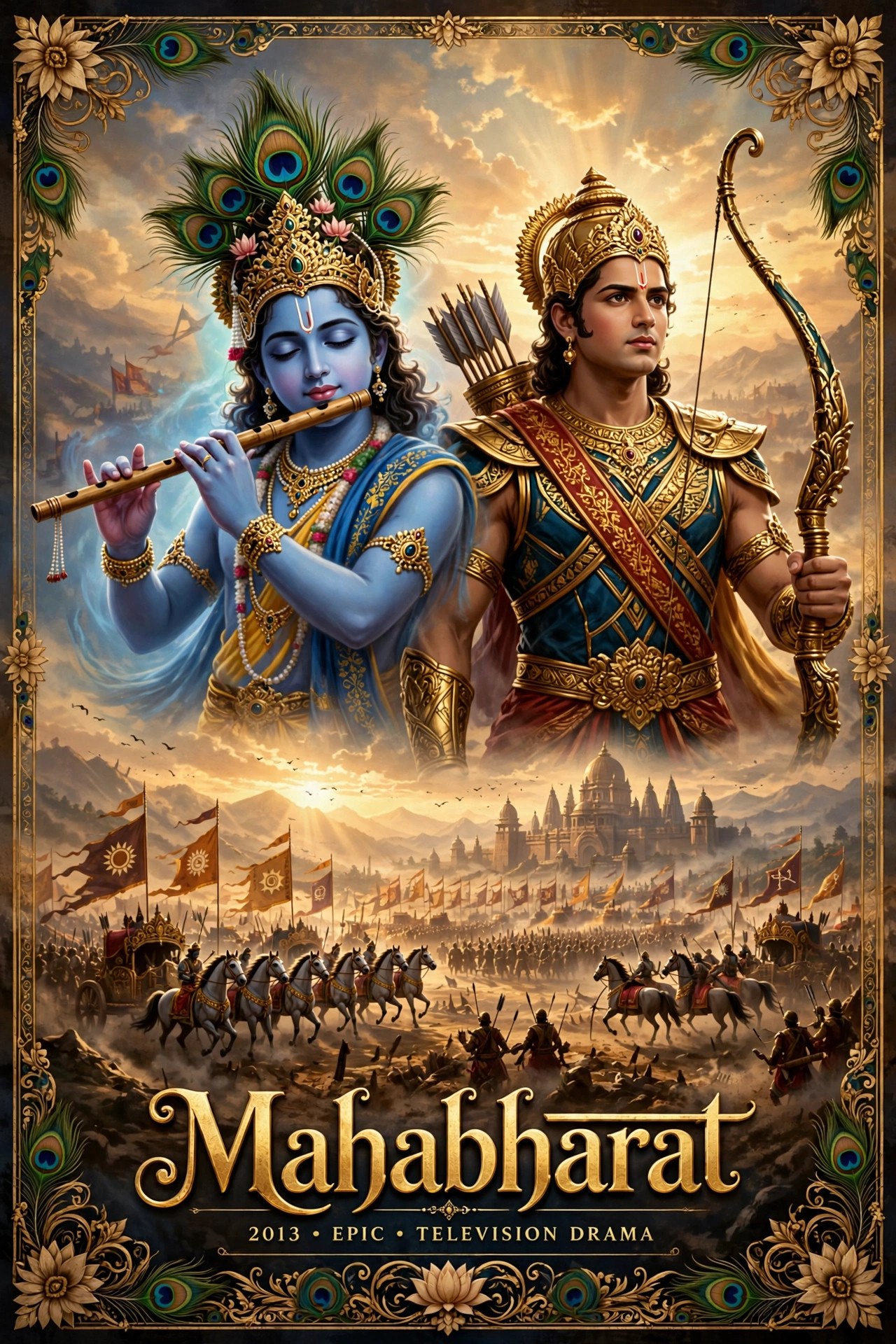
Mahabharat (2013) is the great epic retold for a new generation: a sweeping mythological drama about what is right, what is easy, and the terrible price of choosing between them. When it began on StarPlus in 2013, from Swastik Productions, produced by Siddharth Kumar Tewary, it took up the story of two families, the Pandavas and the Kauravas, whose rivalry over a kingdom grows into the greatest war the world has ever known. Over 267 episodes, ending in August 2014, it followed honour, jealousy, love and dharma as they collide, from the dice game that steals a kingdom to the eighteen days of Kurukshetra. This article tells the full story of Mahabharat (2013), introduces the cast, explores its themes, and gives an honest review. It also explains where to watch the show legally.
- Title: Mahabharat
- Year: 2013
- Channel / Studio: StarPlus — Swastik Productions; produced by Siddharth Kumar Tewary
- Genre: Mythological drama
- Episodes: 267 episodes (ended 16 August 2014)
Story of Mahabharat — Explained
The great epic retold for a new generation: the story of two families, the Pandavas and the Kauravas, whose rivalry over a kingdom grows into the greatest war the world has ever known. The two families are cousins, raised together in the same palace, yet divided by ambition, jealousy and the question of who deserves the throne. What begins as a rivalry between princes grows into a conflict that will consume kingdoms, families and a whole generation.
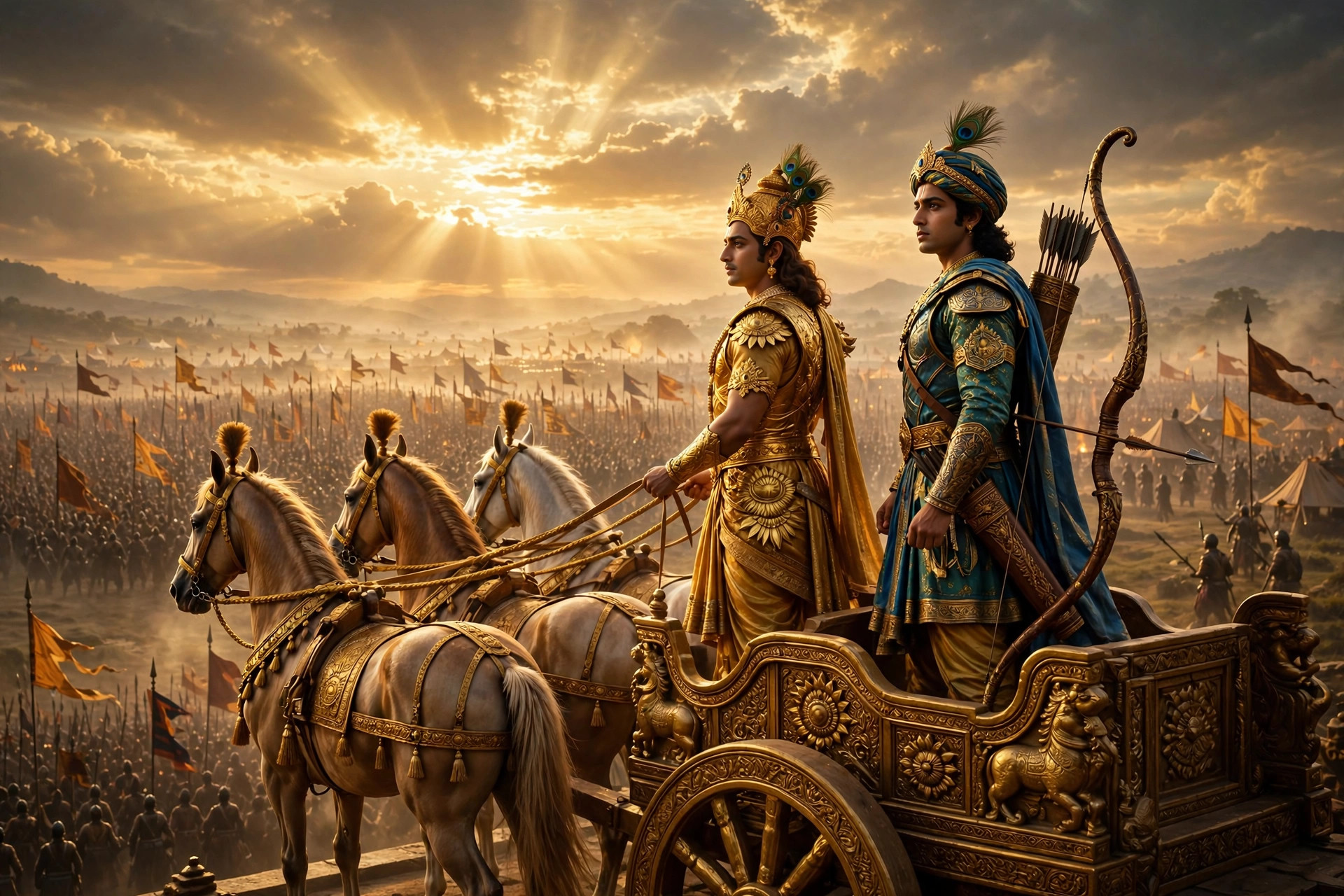
At its centre stands Krishna, friend, guide and divine voice, who walks beside Arjuna through doubt, duty and destiny. Krishna is the heart of the epic, a friend who is also a god, and his counsel to Arjuna on the battlefield of Kurukshetra is the most famous conversation in Indian literature. He does not fight the war himself; he guides those who must fight it, and his wisdom about duty, detachment and dharma gives the story its philosophical depth.
From the dice game that steals a kingdom to Draupadi's humiliation, from Karna's divided loyalty to the eighteen days of Kurukshetra, the series follows honour, jealousy, love and dharma as they collide. The dice game is the turning point: a rigged game that costs the Pandavas their kingdom, their freedom and their wife's honour, and sets in motion the chain of events that leads to war. Draupadi's humiliation in the court is the wound that never heals, and Karna's loyalty to the wrong side, despite knowing the truth, is the epic's great tragedy.
It is a sweeping mythological drama about what is right, what is easy, and the terrible price of choosing between them. Every character must choose, and every choice costs something: Arjuna must fight his own teachers and elders, Karna must choose between loyalty and truth, and Draupadi must live with a humiliation no victory can undo. The war itself is the price of all those choices, and the epic never pretends that victory makes the price worth paying. The series ended in August 2014 after 267 episodes, closing a retelling that brought the epic to a new generation with modern production and timeless questions.
Who Stars in Mahabharat
Saurabh Raj Jain plays Krishna, and his performance is the calm, luminous centre of the show. Krishna is friend, guide and divine voice, and Saurabh Raj Jain gives him a warmth and wisdom that make the audience trust him completely. He shows Krishna's playfulness in the lighter moments and his gravity in the great counsel to Arjuna, and his best scenes are the quiet conversations where a god speaks like a friend. His portrayal became one of the most loved Krishnas on Indian television.
Shaheer Sheikh plays Arjuna, the great warrior whose doubt and duty drive the epic's heart. Arjuna is brave, skilled and deeply conflicted, and Shaheer Sheikh gives him a sincerity that makes his hesitation on the battlefield feel real and human. His best scenes are the ones where Arjuna questions everything he was taught, and Krishna's answers give him the strength to act. Pooja Sharma plays Draupadi, the queen whose humiliation sets the war in motion, and whose fire, dignity and pain give the epic its emotional core. Her performance makes Draupadi's anger feel righteous and her suffering feel real, and she never lets the character become only a victim. Aham Sharma plays Karna, the tragic hero whose divided loyalty is the epic's great sorrow, a man who knows the truth yet stays loyal to the friend who gave him respect when no one else would. Arpit Ranka plays Duryodhana, the proud prince whose ambition and jealousy drive the Kauravas toward war, and whose refusal to share the kingdom makes the great conflict inevitable.
The Ideas Behind Mahabharat
The show's central theme is dharma, the question of what is right. Every character in the Mahabharata must choose between what is right and what is easy, and the show explores how those choices, made in small moments, grow into a war that consumes everything. It argues that dharma is not simple, and that even the best people can be trapped by it, which is why the epic still speaks to viewers today.
A second theme is the price of jealousy and ambition. The Kauravas' envy of the Pandavas begins as a family rivalry and grows into a catastrophe, and the show is honest about how small resentments, left unchecked, can destroy kingdoms. There is also a theme of friendship and guidance, as Krishna's role shows that even the greatest warriors need a friend to help them see clearly, and a theme of fate against choice, since the characters are caught between a destiny they cannot escape and choices they must still make.
Mahabharat (2013) will appeal most to viewers who love mythology, epic storytelling and stories about duty, honour and destiny. It suits families who watch together, and anyone who wants a modern, beautifully made retelling of India's greatest epic. Those who prefer realistic, modern drama will find its mythology distant, but for its audience the epic scale is the attraction, and its questions are timeless.
Is Mahabharat Worth Watching?
Mahabharat (2013) works because it treats the epic with both grandeur and intimacy. The writing is at its best when it lets Krishna guide Arjuna through doubt, and Saurabh Raj Jain and Shaheer Sheikh make their friendship feel like the heart of the story. The production is lavish, with battles, palaces and costumes that give the epic a cinematic scale, and its treatment of dharma as a living question rather than a simple answer gives it real depth. At its best, it is sweeping, thoughtful and deeply moving.
The weaknesses are those of any epic retelling. At 267 episodes, some stretches move slowly, and the sheer number of characters can overwhelm viewers new to the story. The modern production occasionally favours spectacle over the quieter, philosophical moments that give the epic its soul and its deepest meaning.
Even so, the verdict is warm. Mahabharat (2013) is a beautiful, ambitious retelling that brought the great epic to a new generation, and it remains one of the most loved mythological dramas on Indian television. It is well worth watching for its scale, its performances and its timeless questions about duty and destiny that still speak to us today, in every single generation.
Where to Watch Mahabharat
Mahabharat (2013) aired on StarPlus and is available to stream legally on JioHotstar, where the complete series can be watched on demand. Because the show ended in August 2014 after 267 episodes, viewers can now watch the whole story from beginning to end without waiting for new episodes, which makes it a good choice for an epic binge. Start from the early episodes to meet the Pandavas and Kauravas as young princes, then follow their rivalry through the dice game, the exile and the great war of Kurukshetra, watching in order so the epic unfolds as it was meant to. Official streaming offers the best picture quality, subtitles and reliable episode order. Avoid unofficial uploads, which are often incomplete, poor quality or removed without warning.
More about Mahabharat: cast, story, official trailer & where to watch »