Titanic (1997) — Review, Story, Cast & Where to Watch
Titanic (1997) is one of those rare films almost everyone has heard of, even if they have never seen it. Directed by James Cameron, this epic historical romance recreates the maiden voyage of the RMS Titanic in 1912 and places a love story at the centre of one of history's most famous disasters. It is a film about two people from opposite ends of society who meet for a few days on a ship that was supposed to be unsinkable, and about what happens when that certainty falls apart. In this article we explain the story of Titanic, introduce the main cast and characters, look at the themes that keep audiences returning to it, give an honest review, and show where you can watch it legally today.
What makes Titanic endure is its simplicity: a young woman who has everything except freedom meets a young man who has nothing except freedom, on a ship the world believed could not sink.
- Title: Titanic
- Year: 1997
- Channel / Studio: Paramount Pictures — Paramount Pictures / 20th Century Fox / Lightstorm Entertainment; written and directed by James Cameron
- Genre: Epic historical romance / Disaster drama
- Length: Runtime: 194 minutes (3 hours 14 minutes)
The Story of Titanic
The story opens in 1912, when the luxury liner RMS Titanic leaves port on its maiden voyage. The ship carries the richest families of the age in first class and poor travellers in steerage, all of them chasing a new life in America. Among the wealthy passengers is Rose DeWitt Bukater, a young woman engaged to the arrogant Cal Hockley. Rose feels trapped. Her engagement is less a choice than an arrangement, and the life waiting for her on the other side of the Atlantic feels like a cage dressed up as luxury.
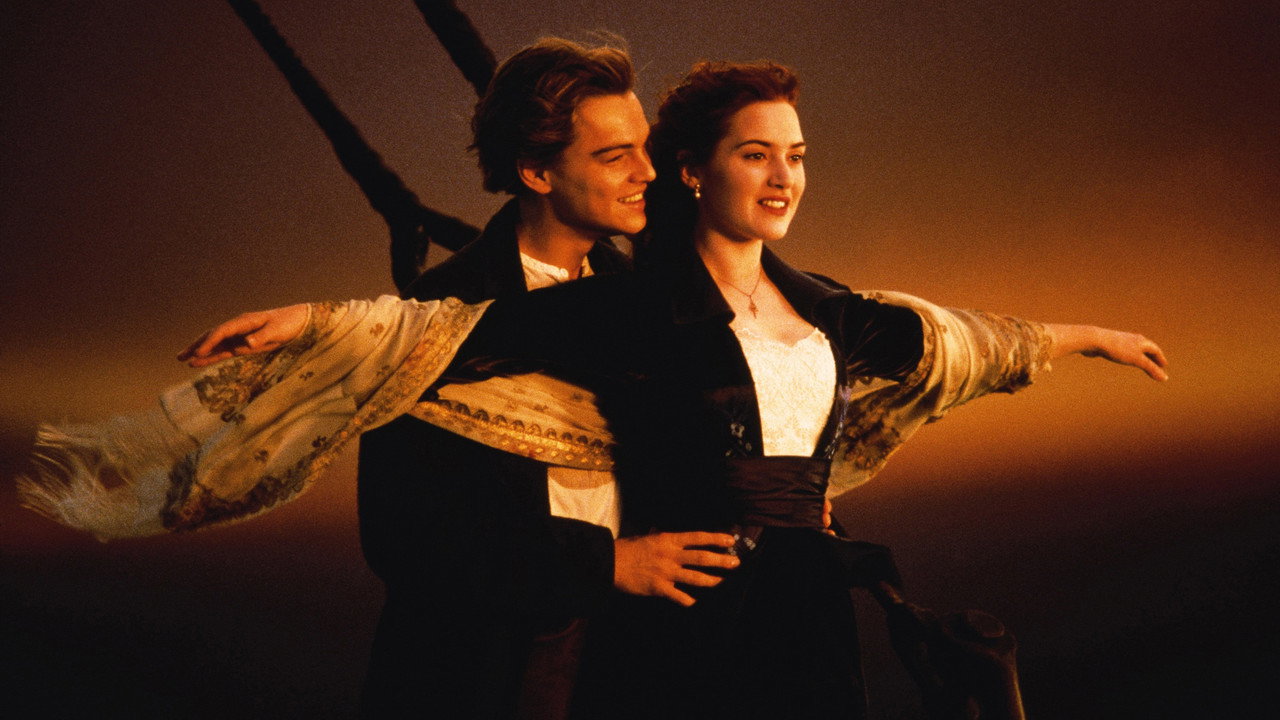
Then she meets Jack Dawson, a penniless artist who won his ticket in a card game. Jack has almost nothing, but he lives freely, and that freedom is exactly what Rose has never been allowed. Their romance grows quickly and intensely, and it deliberately crosses the ship's class divide. One moment they are in grand ballrooms, surrounded by wealth and strict manners; the next they are at crowded steerage parties, where the music is louder, the dancing is wilder and nobody is watching how they behave. The film uses this contrast to show what each of them is missing. Rose finds honesty and joy; Jack finds someone who sees him as more than a poor drifter.
The love story is only half of the film. When the ship strikes an iceberg, everything changes. The romance becomes a desperate fight for survival in freezing water, and the class divide that shaped the first half of the story returns in a crueller form, deciding who gets a place in a lifeboat and who does not. The final stretch of the film is about endurance, sacrifice and loss, as Jack and Rose cling to each other in a disaster that neither of them can control. A framing story with the treasure hunter Brock Lovett, who is searching the wreck for a lost jewel, connects the past to the present and reminds us that this is a story remembered long after the ship went down.
The film also gives weight to the world around the romance. Rose's mother Ruth reminds her that the family's standing depends on the marriage going ahead, while Cal treats Rose less like a partner than a possession. In contrast, Molly Brown treats Jack with warmth and respect. When the iceberg strikes, that rigid order collapses into panic, and the film follows the struggle for the lifeboats and the terrible cold of the water, where survival comes down to luck, endurance and one person holding on for another.
Who Stars in Titanic
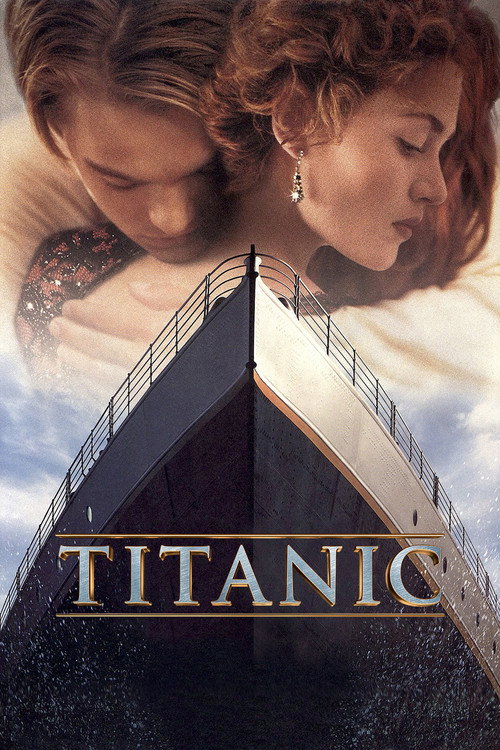
Leonardo DiCaprio plays Jack Dawson, the free-spirited artist whose lack of money is matched by his confidence and warmth. DiCaprio makes Jack feel open and alive rather than naive, and that matters, because the whole romance depends on the audience believing that Rose would risk everything for a young man she has only just met. His easy charm in the steerage scenes and his steadiness when the disaster begins give the character two very different sides.
Kate Winslet plays Rose DeWitt Bukater, and her performance carries the emotional weight of the film. Rose is not simply a rich girl who wants excitement. Winslet shows a young woman suffocating under expectation, polite in public and furious in private, and her gradual change from guarded fiancee to someone willing to defy her whole world is the real arc of the story. Billy Zane plays Cal Hockley, Rose's fiance, with cold arrogance. Cal is not a cartoon villain; he is a man who believes money buys obedience, and Zane makes that entitlement feel genuinely menacing.
Kathy Bates plays Molly Brown, the warm-hearted, plain-speaking first-class passenger who treats Jack with kindness when others look down on him. Frances Fisher plays Ruth DeWitt Bukater, Rose's mother, whose concern for status and money keeps tightening the pressure on her daughter. Bill Paxton plays Brock Lovett, the modern-day treasure hunter whose search for a jewel in the wreck frames the story and gives the film its link between past and present.
The chemistry between DiCaprio and Winslet makes the romance believable. DiCaprio plays Jack as poor but never pitiful, confident because he has nothing to lose, while Winslet shows Rose's intelligence and anger beneath her polished manners. Billy Zane's Cal is a useful counterweight, charming until he is disobeyed, and Kathy Bates brings humour and heart to Molly Brown, the one wealthy passenger who judges people by behaviour rather than money.
What Titanic Is Really About
The strongest theme in Titanic is class. The ship is a floating picture of society, with luxury above and hardship below, and the film keeps showing how the same voyage means completely different things depending on where you sleep. Jack and Rose's romance works as drama precisely because it crosses a line that their world says must not be crossed. A second theme is freedom against control. Rose has wealth and no choices; Jack has choices and no wealth. The film asks which of those is really a richer life, and it answers without preaching, simply by showing Rose coming alive when she is allowed to be herself.
There is also a theme of memory and storytelling. The wreck is explored by people who were not there, and the story only survives because someone remembers it and tells it. That gives the romance a bittersweet quality: we know from the start how it ends, and the film's power comes from making us care anyway. Titanic will appeal to viewers who love sweeping romances, historical drama and big emotional stories, and to anyone who enjoys a film that mixes spectacle with a personal, human core. It is long, at 194 minutes, but its length is part of the design, giving the audience time to live on the ship before it goes down.
Another theme is the danger of certainty. The Titanic was called unsinkable, and that confidence shaped every decision on board, from the speed of the voyage to the number of lifeboats. The film also frames itself as a memory, told by an old woman looking back on the few days that defined her life, which gives the romance its ache: we know the happiness is brief, and what survives is the memory of it.
Is Titanic Worth Watching?
Titanic works because it earns its emotions. The first half builds the world of the ship and the relationship between Jack and Rose with patience, so that when the disaster arrives, the danger feels personal rather than abstract. The scale of the production is still impressive: the ship feels real, the contrast between first class and steerage is vivid, and the sinking itself is staged as a slow, terrifying collapse rather than a quick shock. The romance at the centre is simple, even old-fashioned, and that simplicity is a strength, because it leaves room for the audience to feel the loss without being told how to feel.
The film is not without weaknesses. Some of the dialogue is sentimental, and a few scenes lean hard into melodrama. The length will test viewers who prefer tighter pacing, and the framing story with Brock Lovett is the least interesting part of the film. But these are small complaints against a film that does what it sets out to do with rare confidence. Titanic is a grand, emotional, beautifully made romance and disaster drama, and it remains one of the most watched and most talked-about films ever made for good reason.
The film's craft also deserves praise. The recreation of the ship is detailed and convincing, and the sinking is staged with a patience that makes it more frightening, not less. Viewers who dislike sentimental romance may find some scenes too earnest, and the length asks for a real commitment. Even so, Titanic is a landmark of popular cinema, mixing romance, history and spectacle into something that has lasted far beyond its moment.
Where to Watch Titanic
Titanic is available to stream legally on several major platforms, so most viewers will find it on a service they already use. It is listed on Paramount+ and Disney+, and it is also available on Amazon Prime Video. Availability can change by country and over time, so it is worth checking your local catalogue before you settle in for the evening. The film runs for 194 minutes, just over three hours, so plan for a long viewing session. If you are watching with family, note that the film contains disaster scenes and moments of peril that may be intense for younger viewers. The official trailer is available online from Paramount Movies, and it gives a good sense of the film's scale without spoiling the story.
The official trailer from Paramount Movies is a good starting point if you want a sense of the film's scale before committing to the full three hours and fourteen minutes. Streaming catalogues change, so confirm the current listing on your own service before you settle in, and watch it in one sitting if you can.
More about Titanic: cast, story, official trailer & where to watch »