Joker (2019) — Review, Story, Cast & Where to Watch
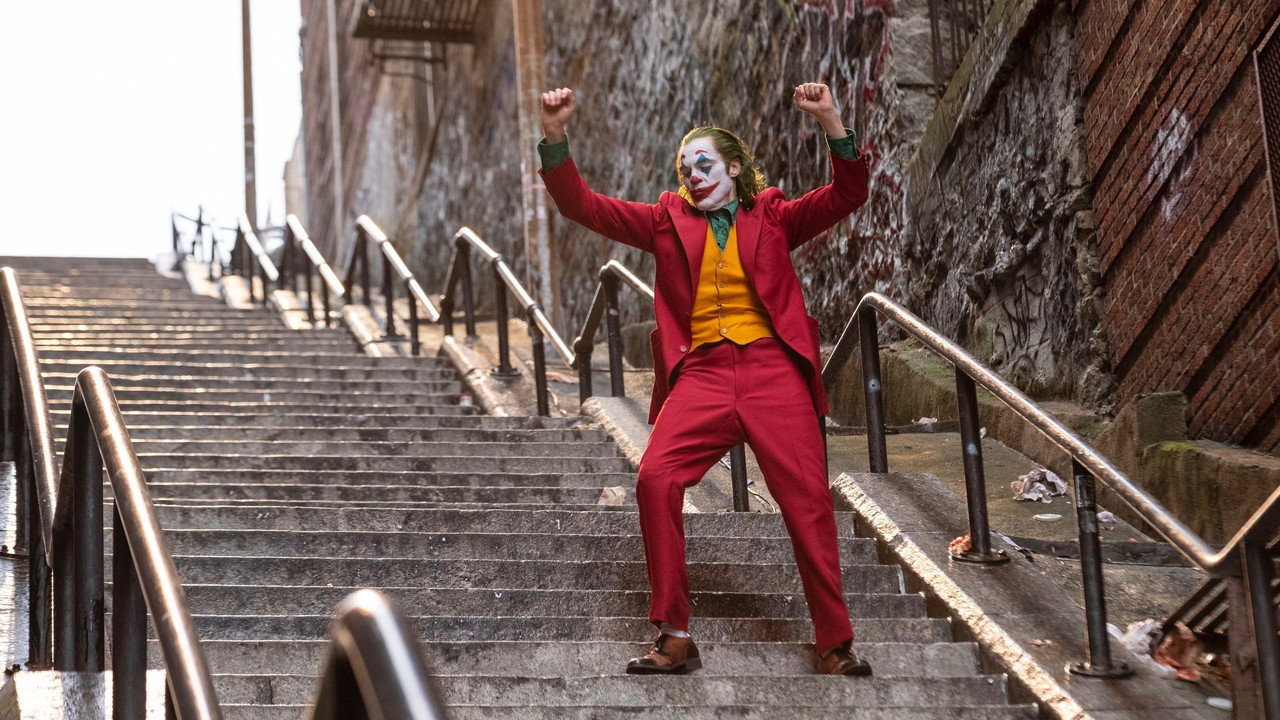
Joker (2019) is a dark, unsettling portrait of a man pushed to the edge, and one of the most talked-about films of its year. Directed by Todd Phillips, it follows Arthur Fleck, a lonely man in Gotham City who works as a party clown and dreams of being a stand-up comedian, as the city keeps knocking him down. This article explains the story of Joker, introduces the cast and characters, explores the themes of loneliness, mental health and a city in crisis, gives an honest review, and shows where you can watch it legally.
What makes Joker different from other comic-book films is that it has almost no superhero in it. There is no Batman swooping in to save the day, and no grand battle. Instead, there is a single man, slowly unravelling, and a city that seems ready to unravel with him. It is a psychological drama that asks uncomfortable questions about how society treats people who are struggling, and it does so without offering easy answers.
The film's power comes from its focus.
- Title: Joker
- Year: 2019
- Channel / Studio: Warner Bros. Pictures — Warner Bros. Pictures, DC Films, Village Roadshow Pictures; directed by Todd Phillips
- Genre: Crime, Drama, Thriller (Psychological drama)
- Length: Runtime: 122 minutes (2 hours 2 minutes)
Story of Joker — Explained
Arthur Fleck is a lonely man in Gotham City who works as a party clown and dreams of being a stand-up comedian, but the city keeps knocking him down. He is beaten in the street, mocked by strangers, fired from his job, and ignored by the systems that were supposed to help him. The film shows his daily life in detail: the medication he takes, the social worker who barely listens, the mother he cares for, and the comedy club where he hopes, one day, to be noticed. Arthur's loneliness is the film's foundation, and the film never lets the audience forget it.
As his mental health unravels and his grip on what is real starts to slip, Arthur begins to see the cruelty around him more clearly, and he stops trying to fit into a world that has no place for him. The film plays with what is real and what is imagined, and the audience is left unsure how much of Arthur's story is happening and how much is in his head. That uncertainty is deliberate: it puts the audience inside Arthur's experience, where the line between fantasy and reality is thin.
When a chance encounter on the subway turns violent, Arthur discovers a power he never knew he had, and Gotham begins to notice him at last. The violence changes him, and it changes the city. What begins as a single act becomes a symbol, and the film follows Arthur as he stops hiding and starts performing, first on a stage and then in the streets. It is a dark, unsettling portrait of a man pushed to the edge and a city ready to follow him over it, and its ending is deliberately disturbing, leaving the audience to decide what they have just watched: a tragedy, a warning, or both.
The film's middle stretch is a study in small humiliations adding up. Arthur loses his job, his medication is cut off, his social worker stops listening, and the comedy club where he dreams of performing laughs at him rather than with him. Each loss is small on its own, but together they close every door Arthur has. The film also plays with Arthur's imagination: scenes that seem real turn out to be fantasies, and the audience is left to wonder which of Arthur's victories actually happened. That uncertainty is the film's most daring choice, because it means the audience cannot trust what they see, just as Arthur cannot trust what he sees. The subway scene is the turning point, a violent encounter that Arthur does not plan but that changes him completely.
Who Stars in Joker
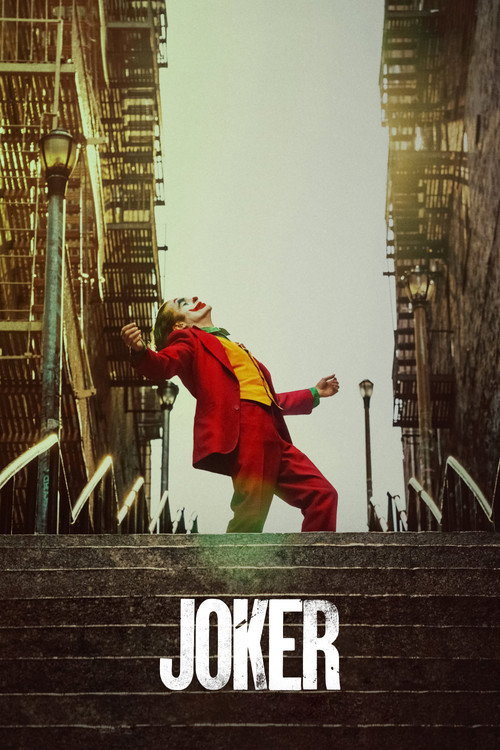
Joaquin Phoenix plays Arthur Fleck, also known as the Joker, in a performance that carries the entire film. Phoenix plays Arthur as a man in constant pain, physically and emotionally, and his transformation across the film is both gradual and shocking. His laugh, a painful, involuntary condition, becomes the film's most haunting sound, and his dancing, awkward and then confident, shows Arthur finding a freedom that frightens the audience. It is a brave, committed performance that never asks for sympathy but earns attention.
Robert De Niro plays Murray Franklin, the talk-show host Arthur idolises, a man whose charm on screen hides a casual cruelty. De Niro's presence gives the film weight, and his scenes with Arthur are among its most tense. Zazie Beetz plays Sophie Dumond, Arthur's neighbour, whose kindness offers him a brief hope of connection, and whose story is one of the film's most quietly sad turns. Frances Conroy plays Penny Fleck, Arthur's mother, whose version of the past shapes Arthur's understanding of himself, while Brett Cullen plays Thomas Wayne, the wealthy businessman whose indifference to the city's poor becomes a symbol of everything Arthur resents. Bill Camp plays Detective Garrity, one of the officers investigating the violence that follows Arthur.
Phoenix's Arthur is a physical performance as much as an emotional one. His thin frame, his awkward movements and his painful laugh all show a man whose body is as uncomfortable as his mind, and his dancing, first awkward and then confident, becomes the film's visual language for Arthur's change. De Niro's Murray Franklin is the film's symbol of the world Arthur wants to join: a man who is charming on television and dismissive in person, and whose laughter at Arthur is the final humiliation. Beetz's Sophie is the film's quiet tragedy, a neighbour whose kindness Arthur misreads, and whose story shows how loneliness can distort even a simple friendship. Conroy's Penny is a sad, complicated figure, a mother whose stories about Arthur's past may or may not be true, and whose influence shapes everything Arthur believes about himself.
The Ideas Behind Joker
The central theme of Joker is loneliness. Arthur is surrounded by people and utterly alone, and the film shows how that loneliness, combined with a city that ignores him, can curdle into something dangerous. A second theme is the failure of care: the systems meant to help Arthur, his social worker, his medication, his job, all fail him, and the film asks what happens when help is withdrawn from people who need it most.
There is also a theme of performance and identity. Arthur wants to be seen, to be laughed with rather than laughed at, and the film shows him finding an audience only when he stops trying to be kind and starts being frightening. Joker will appeal to viewers who love psychological drama, character studies and bold, unsettling films, and to anyone interested in a comic-book story told as a serious drama. At 122 minutes, it is a tight, focused film that never looks away from its subject.
Another theme is the relationship between the individual and the city. Gotham is not just a setting but a character, a place where garbage piles up, services fail, and anger spreads, and the film suggests that Arthur is a product of that city as much as he is a cause of its chaos.
Is Joker Worth Watching?
Joker is a powerful and disturbing film. Its greatest strength is Joaquin Phoenix, whose performance is extraordinary, funny, frightening and heartbreaking, often in the same scene. The film's direction is confident, its look is gritty and convincing, and its score adds to the sense of dread. It is a film that takes a comic-book character seriously as a study of a man in crisis, and that seriousness is what makes it memorable.
The film's weaknesses are real, though. Its view of mental illness is simplified, and some viewers will find its violence exploitative or its message unclear. The film raises questions about society and responsibility without answering them, which can feel frustrating. But these are the risks of a film that wants to unsettle rather than comfort. Joker is a bold, uncomfortable and brilliantly acted film, and it remains one of the most debated movies of recent years.
The film also deserves praise for its look and sound. Gotham is rendered in gritty, decaying detail, the score is haunting, and the direction keeps the camera close to Arthur, so the audience never escapes his perspective. The film's pacing is deliberate, and its tension builds slowly rather than through action. On the weaker side, its view of mental illness is simplified, and some viewers will find its message unclear or its violence exploitative. The film raises questions about society and responsibility without answering them, which can feel frustrating. Even so, Joker is a bold, uncomfortable and brilliantly acted film, and it remains one of the most debated movies of recent years, a film that people argue about because it refuses to tell them what to think.
Where to Watch Joker
Joker is available to stream legally on HBO Max, and it is also available to rent or buy on Amazon Prime Video and Apple TV. Availability can vary by country, so check your local catalogue if it is not showing on one of these services in your region. The film runs for 122 minutes, just over two hours, which makes it a tight, intense watch. It is a crime drama and thriller with strong violence and disturbing themes, so it is strictly for adult viewers. Watching it without distractions is best, since the film's power comes from staying close to Arthur's experience.
Watching it without distractions is best, since the film's power comes from staying close to Arthur's experience, and its two hours and two minutes pass quickly despite the heaviness of the subject. It is strictly for adult viewers, and it is worth watching with someone to discuss it with afterwards, because the film raises questions that are easier to think through together. Check the streaming options listed above for your country.
More about Joker: cast, story, official trailer & where to watch »