Get Out (2017) — Review, Story, Cast & Where to Watch
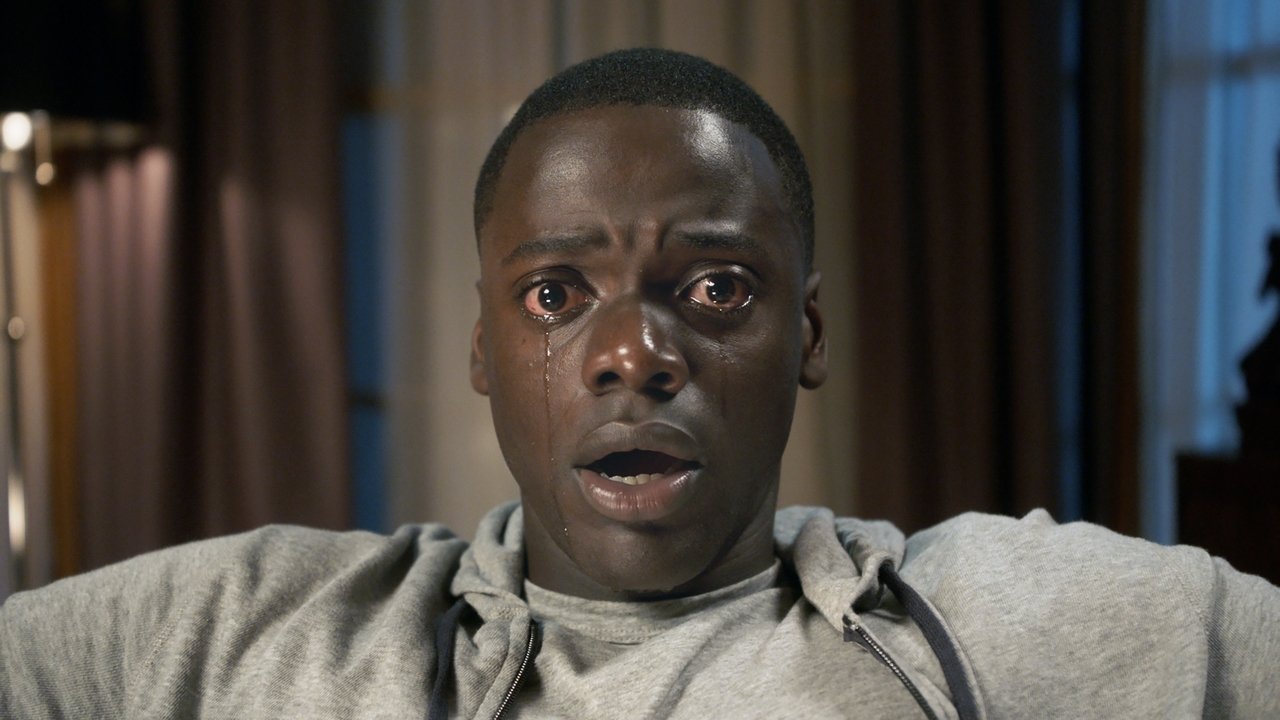
Get Out (2017) is a sharp, terrifying story about race, control and the danger of trusting the wrong people. Directed by Jordan Peele, it follows Chris, a young photographer, who travels to the country to meet the parents of his girlfriend Rose for the first time. This article explains the story of Get Out, introduces the cast and characters, explores the themes of race, liberal racism and bodily autonomy, gives an honest review, and shows where you can watch it legally.
What makes Get Out special is that it is a horror film about something real. Its monsters are not supernatural but social: polite, well-meaning people whose friendliness hides a horrifying secret. It is a film that is both terrifying and funny, and it changed what horror could be about.
The film's horror is in its politeness. The Armitages are friendly, liberal and welcoming, and their friendliness is the most frightening thing about them, because it hides a secret that is both shocking and, in the film's logic, inevitable.
- Title: Get Out
- Year: 2017
- Channel / Studio: Universal Pictures — Universal Pictures, Blumhouse Productions; directed by Jordan Peele
- Genre: Psychological Horror
- Length: Runtime: 104 minutes (1 hour 44 minutes)
What Happens in Get Out
Chris, a young photographer, travels to the country to meet the parents of his girlfriend Rose for the first time. Her family seems welcoming, but something is off: the black staff behave strangely, the neighbours stare a little too long, and every conversation feels like an interrogation. The film's first half is a masterclass in unease, with small details adding up: a comment about Chris's body, a hypnosis session presented as help, and a party where the guests examine Chris like a prize. Peele films these scenes with a quiet, creeping dread, and the audience, like Chris, begins to sense that something is deeply wrong.
As the weekend goes on, Chris begins to realise that the Armitage family is hiding a horrifying secret, and that he may not be a guest at all, he may be the next victim. The secret, when it is revealed, is both shocking and logical: the family has found a way to extend their lives by taking the bodies of others, and Chris is their next target. The film's second half is a tense, thrilling escape, as Chris must use his wits to survive a house full of people who want his body. His friend Rod, a TSA agent who takes his warnings seriously when no one else does, provides the film's comic relief and its moral centre. It is a sharp, terrifying story about race, control and the danger of trusting the wrong people, and its ending is both a triumph and a warning.
The party scene is the film's centrepiece, a gathering where the Armitages' friends examine Chris like a prize, asking about his body, his talents and his genes, and the film's horror comes from how ordinary it all seems. The guests are polite, the conversation is friendly, and the racism is so casual that it is almost invisible, which is exactly the film's point. Chris's hypnosis, presented by Missy as help for his smoking, is the film's most terrifying sequence: a calm, clinical procedure that traps Chris in a place called the Sunken Place, where he can see and hear but cannot act, a perfect image of powerlessness. The revelation of the family's secret, that they transplant the brains of old white people into young Black bodies, is both shocking and logical, a literal version of the cultural theft the film has been showing all along. Chris's escape is thrilling and cathartic, as he uses his wits and his camera to fight back, and Rod's arrival, in a police car, is the film's funniest and most satisfying moment, a friend who believed Chris when no one else did.
The Cast of Get Out
Daniel Kaluuya plays Chris Washington with a quiet, watchful intelligence that carries the film. Kaluuya's Chris is polite and observant, and his performance shows a man who senses danger before he can name it. Allison Williams plays Rose Armitage, Chris's girlfriend, whose warmth hides a terrifying secret, and Williams plays her duality with chilling skill. Bradley Whitford plays Dean Armitage, Rose's father, whose liberal friendliness is the film's most unsettling mask, while Catherine Keener plays Missy Armitage, Rose's mother, a hypnotist whose calm, clinical manner is genuinely frightening.
Caleb Landry Jones plays Jeremy Armitage, Rose's brother, whose aggression and entitlement give the film its menace. Lil Rel Howery plays Rod Williams, Chris's friend, whose humour and loyalty provide the film's comic relief and its most sensible voice, a man who sees the danger clearly and tries to save his friend.
Kaluuya's Chris is polite and observant, a photographer who senses danger before he can name it, and his performance shows a man who is always watching, always thinking. Williams's Rose is warm and chilling in equal measure, a girlfriend whose love hides a terrifying secret, and Williams plays her duality with skill. Whitford's Dean is friendly and liberal, a father whose admiration for Black culture is the film's most unsettling mask, while Keener's Missy is calm and clinical, a hypnotist whose politeness makes her terrifying. Jones's Jeremy is aggressive and entitled, a brother whose menace gives the film its physical threat, while Howery's Rod is the film's comic relief and its moral centre, a friend who sees the danger clearly and tries to save Chris, and whose humour makes the horror bearable.
What Get Out Is Really About
The central theme of Get Out is race. The film shows a polite, liberal racism that is more insidious than open bigotry: the Armitages admire Black culture, Black bodies and Black talent, but they see Black people as resources to be used rather than as equals. A second theme is control: the family's secret is about controlling other people's bodies, and the film treats that as the ultimate violation. There is also a theme of trust: Chris trusts Rose, and the film shows how that trust is betrayed, and how difficult it is to see danger in people who seem kind.
Get Out will appeal to viewers who love horror, thrillers and sharp social commentary, and to anyone who enjoys a film that is both terrifying and intelligent. At 104 minutes, it is a tight, tense film that never wastes a scene.
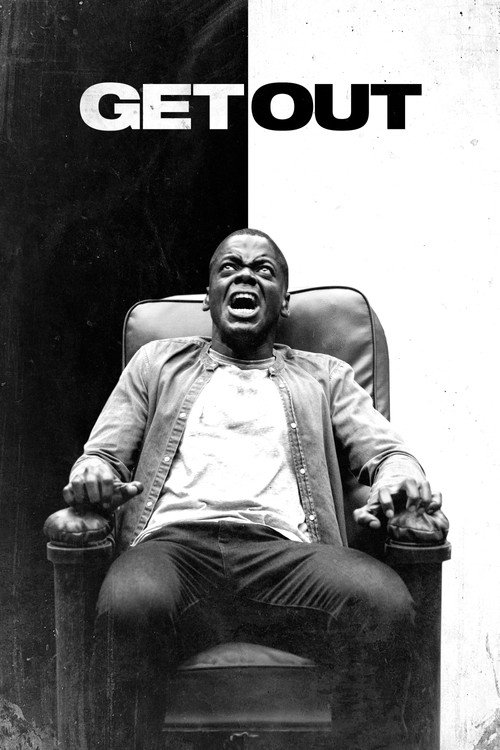
Another theme is the Sunken Place as a metaphor. The film's image of a person trapped inside their own body, able to see but unable to act, is a powerful picture of marginalisation, and it gives the film's horror a meaning that goes beyond the plot. There is also a theme of the body: the Armitages want Black bodies for their strength and vitality, and the film shows that desire as both a compliment and a violation. Get Out will appeal to viewers who love horror, thrillers and sharp social commentary, and to anyone who enjoys a film that is both terrifying and intelligent. It is a film that changed what horror could be about.
Get Out Review — Our Verdict
Get Out is a brilliant film. Its greatest strengths are its writing and its direction: Peele's script is sharp, funny and terrifying, the film's clues are planted with care, and Kaluuya's performance is superb. The film balances horror and comedy perfectly, and its ending is satisfying and thought-provoking. It is a landmark of modern horror.
The film's weaknesses are few. Some viewers may find its final act more conventional than its first half, and its message, while powerful, is delivered directly. But these are small points. Get Out is a sharp, terrifying and brilliantly made film, and it remains one of the most important horror films of recent years.
The film also deserves praise for its clues. Peele plants details throughout the first half, the tea cup, the photographs, the deer, that take on new meaning once the secret is revealed, and a second viewing is richly rewarding. The balance of horror and comedy is perfect, and the ending is satisfying. On the weaker side, some viewers may find its final act more conventional than its first half, and its message is delivered directly. But these are small points. Get Out is a sharp, terrifying and brilliantly made film, and it remains one of the most important horror films of recent years, a landmark of modern cinema.
Where to Watch Get Out
Get Out is available to stream legally on Peacock, and it is also available to rent or buy on Amazon Prime Video and Apple TV. Availability can vary by country, so check your local catalogue if it is not showing on one of these services in your region. The film runs for 104 minutes, one hour and forty-four minutes. It is a psychological horror film with disturbing themes and violence, so it is best suited to adult viewers. Watching it without knowing too much about the plot is ideal, since its revelations are a big part of its power.
Watching it without knowing too much about the plot is ideal, since its revelations are a big part of its power, and its one hour and forty-four minutes pass quickly. It is best suited to adult viewers, given its disturbing themes and violence. Check the streaming options listed above for your country.
More about Get Out: cast, story, official trailer & where to watch »